

नेपाल सरकार
संस्कृति, पर्यटन तथा नागरिक उड्डयन मन्त्रालय
सिंहदरवार, काठमाण्डौ


-
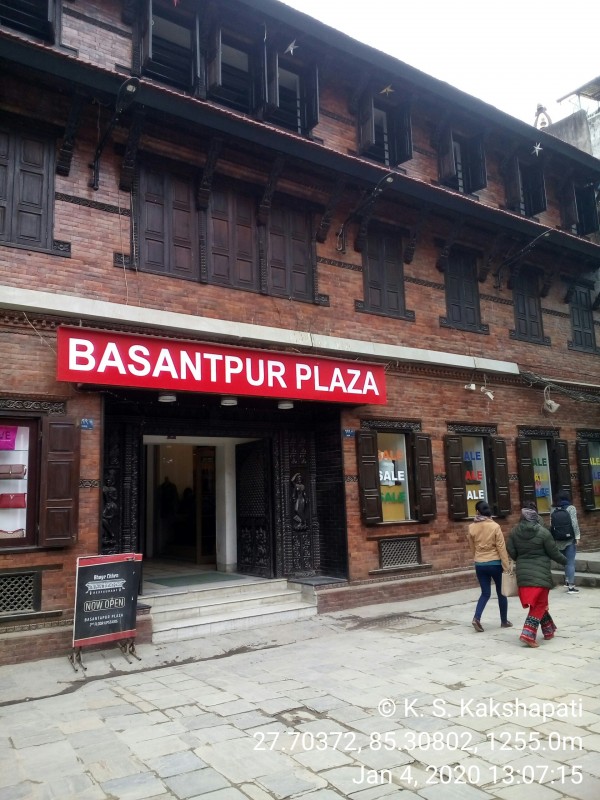
Basantapur Plaza
Entertaintment
Shopping mall
Bagmati Pradesh
Kathmandu
-

Best Shopping Center
Entertaintment
Shopping mall
Bagmati Pradesh
Kathmandu
-
_Mall_919.jpg)
Civil Trade Centre (CTC) Mall
Entertaintment
Shopping mall
Bagmati Pradesh
Kathmandu
-
Share Market Shopping Complex
Entertaintment
Shopping mall
Bagmati Pradesh
Kathmandu
-
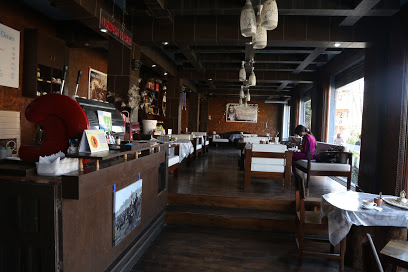
BIA Café
Hospitality
Cafe
Bagmati Pradesh
Kathmandu
Basantapur Plaza
Landmark
Basantapur Plaza

[ Everest is the highest peak in the world. It has an elevation of 8,848 meters (29,028 feet) above sea level. Everest falls in the Khumbu Pasanglamu municipality of Solukhumbu district in Nepal. In the Tibetan language, its name is Chomolung. Especially Thulung Rai locals call Mt. Everest Chomolung. Everest was named Mount Everest in 1865 after the British surveyor Colonel Sir George Everest. Later, in 1956 (2012 BS), Shiromani Baburam Acharya named it Mount Everest and also wrote the Nepali name of Mount Everest, Xyamolongmo. It is also called Devdhunga in some places. Everest was first climbed on May 29, 1953 at 11:15 a.m. by Tenzing Norgay Sherpa of Nepal and Sir Edmund Hillary of New Zealand. ]
History
We have put together this comprehensive guide about Mount Everest and it’s climbing history. If you ever have had a fascination about Mount Everest or dream of climbing up Mount Everest yourself you will find plenty of helpful and useful information in this post.
Street Map


The legacy of Mount Everest through its attractions
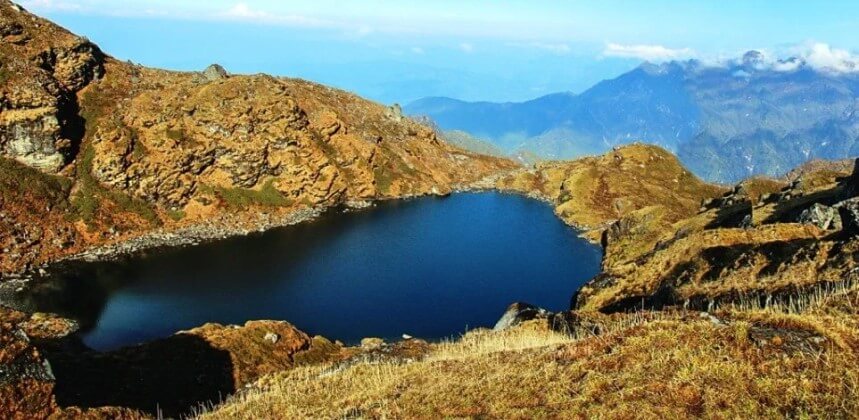
Five Ponds
Heading east from Salleri, the district headquarters of Solukhumbu, you will find five ponds in the upper reaches of Bung via Pavai, Sotang. There are five ponds in Mahakulung village municipality of Solukhumbu. They are known as Budhapokhari, Budhipokhari, Chorapokhari, Buhari Pokhari and Kamara Pokhari. The five ponds at an altitude of 4750 m above sea level have their own significance. It is very important from a religious and tourist point of view. A big fair is held in this place every year on Chandi Purnima of Baisakh and Janai Purnima of Shravan month. From this place you can see the beautiful scenery of Merapik, Kimpa, Numvur and rivers, lakes, waterfalls etc. Many waterfalls, birds, caves as well as wildlife can be seen on this footpath. From here, through the various settlements of Kulung Rai and Sherpa community, one can observe their culture, lifestyle and local food, as well as dozens of mountains including Everest, Lhotse, Makalu, Chamlang, Mera Peak.

Syangboche
Syangboche, one of the most lovely and enchanting places throughout the world, lies at the lap of Khumbila and on the top of Namche Bazaar. This place can be reached by one hour's helicopter and Pilatus Porter plane flight from Kathmandu, an hour's walk from Namche Bazaar, three hours walk from Thame, 30 minutes walk from Khumjung, 30 minutes walk from Khunde and four hours walk from Tyangboche. From Syangboche, one can have a very clear view of Mount Everest that lies in the midst of towering Himalayan ranges dotted with rivers like Dudh Koshi and Bhote Koshi river, some desert-like areas and green forests which are home to rare wildlife. Prominent Himalayas that can be seen from here include Mount Everest, Nuptse, Lhotse, Tawache, Khumbila, Amadablam, Thamserku, Kusum Kangaru, Tashi Lhaptsa, Nangbala, etc.


